
Energy and technology
The goal is Norway's most energy-efficient, robust and attractive housing development. Below is the concept as it stands: the direction from the project owner, the energy budget for the whole field, the simulated borehole field, and the assessment of every measure. All of it is a working basis with source and date, not promises.
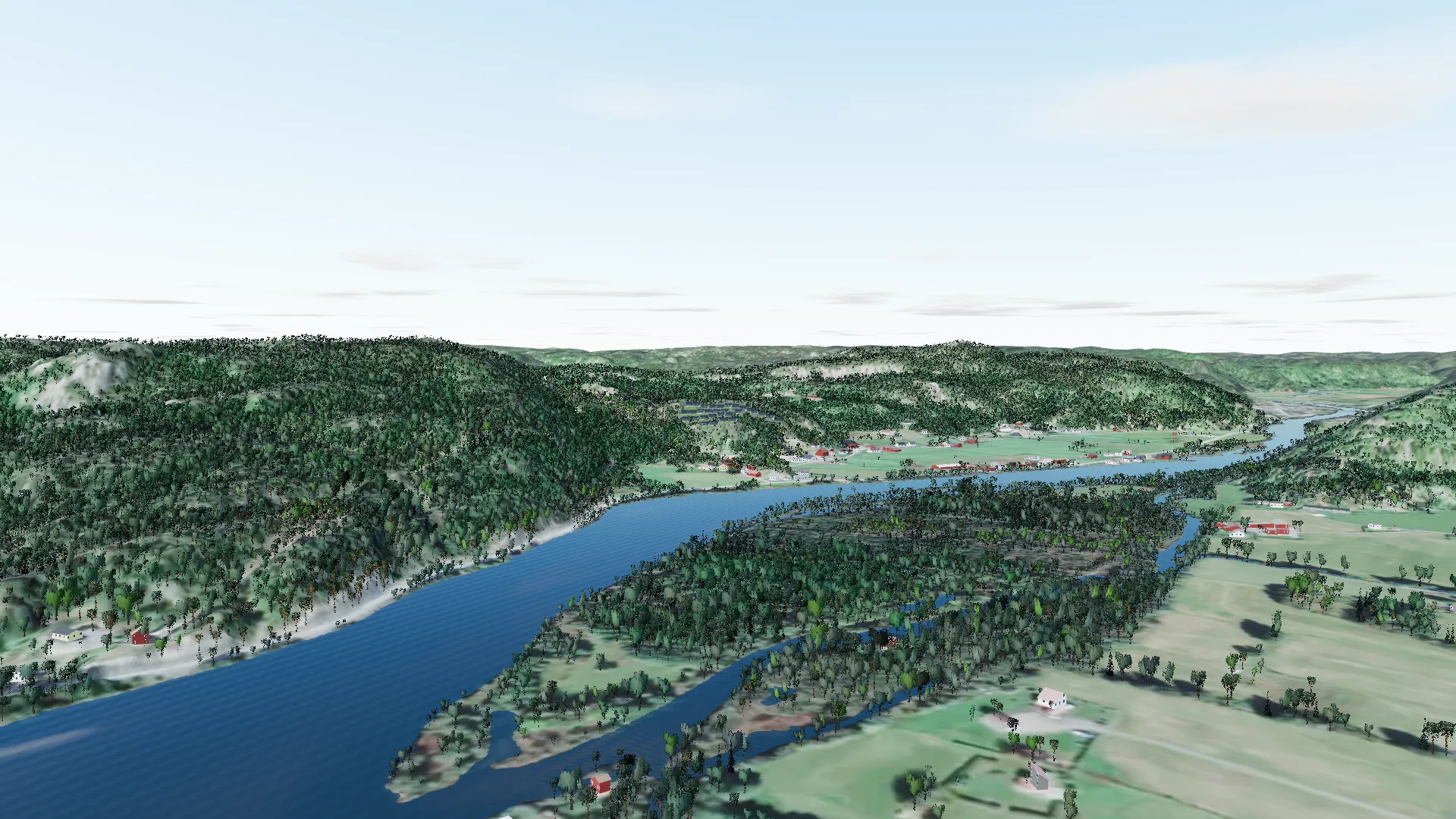
How it fits together.
The sun and possibly wind charge a battery in every home and perhaps a shared store. Smart control shares the power out to the homes, the office building and the warehouse, and the grid takes the surplus and covers the rest. The sand battery is dropped.
The budget for one year.
The whole field: 30 homes, the office building and the warehouse and workshop. Demand against what can be produced and stored locally.
The 31 % module efficiency in the spreadsheet is set too high; standard modules sit at 20 to 23 %, so the solar figure should come down about 30 % before it is used further. The wind figure needs a wind measurement on site.
The heat can come from the rock.
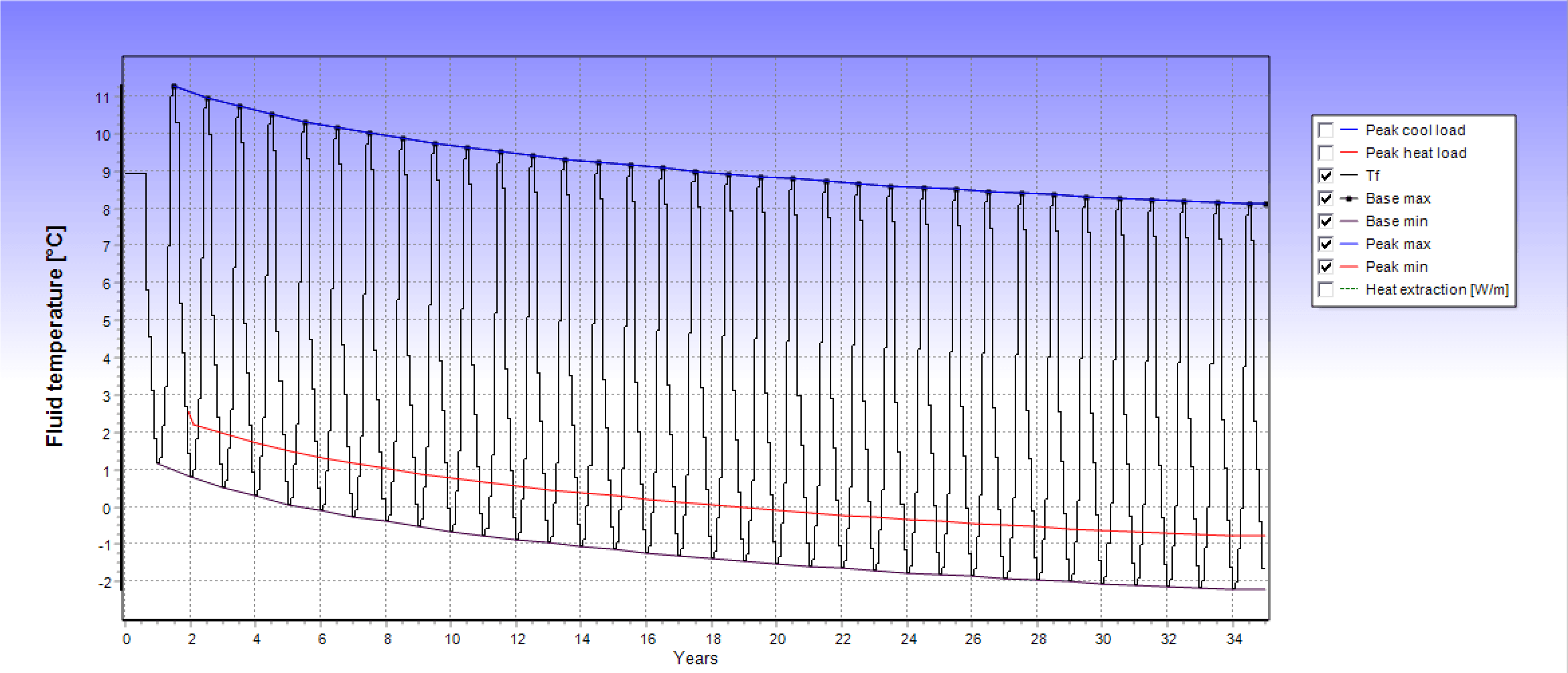
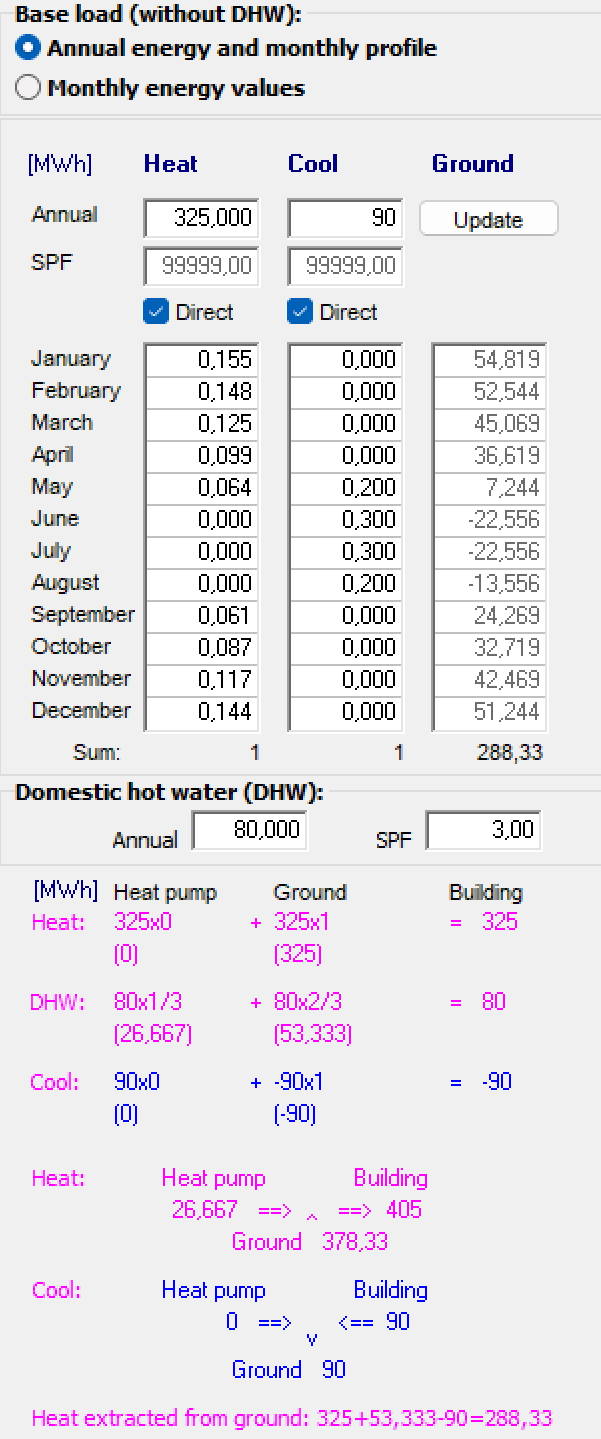
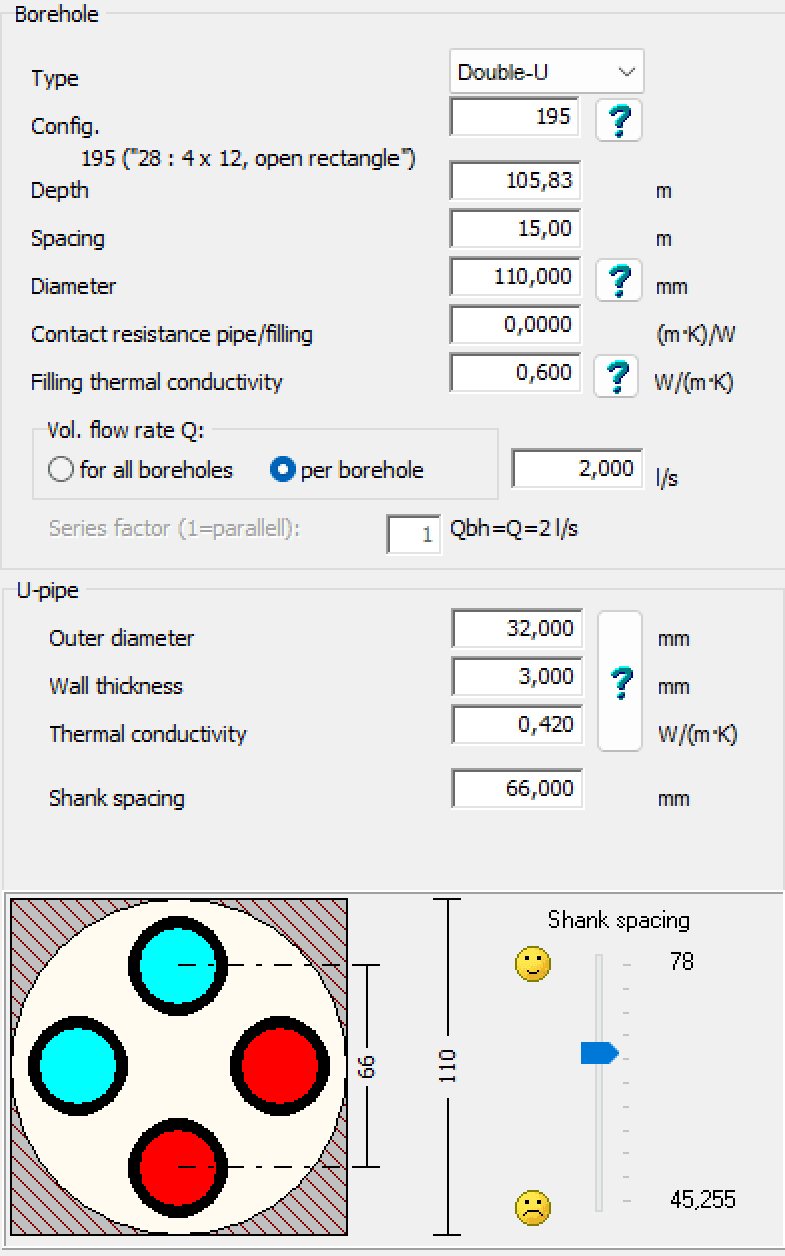
The borehole field is simulated in Earth Energy Designer: 28 boreholes in a 4 x 12, open rectangle, about 106 metres deep, 15 metres apart. With 325 MWh of heat and 80 MWh of hot water a year, the fluid temperature settles over 35 years; in the last year it stays between -0.78 and 8.12 degrees. The energy track judges both to be good.
- Wind power in the 50 to 250 kW class
- Hybrid solar panels and solar collectors
- Varden school in Bergen and Zero Village Bergen as reference projects
- The TRNSYS and Winsun tools
Every measure, assessed.
17 measures. The energy track compared 16 of them on cost, feasibility, robustness in an outage and what they actually give; the shared solar plant came later with the project owner's direction. Yes, maybe and no are the provisional assessment; where the energy track and the project owner differ, both are in the text.
Panels on south-facing roofs at 15 to 40 degrees, an inverter and a production meter. Surplus to the battery.
Can cover a large share of the demand. The energy track's table estimates about 235,000 kWh a year on 1,350 m² of roof.
A larger plant at the highest point behind the field, first scenario around 600 panels.
Direction from the project owner. Area, slope, shading and system losses must be computed before the figure is used.
A small turbine on a mast. Supplying 30 homes takes 1 to 3 turbines of 50 to 250 kW.
Energy track: no, demanding permits and a lot of space. Project owner: wind is evaluated as a supplement, based on local measurements.
Boreholes at least 15 m apart, heat pump with a seasonal performance factor around 3.6.
Yes or maybe: whether the boreholes are used for storage or for extracting heat is not settled. High efficiency, stable in any outdoor temperature, low running cost, free cooling in summer.
Boreholes in a tight grid, 3 to 6 m, to store summer heat and take it back in winter.
Solves the seasonal mismatch. Unclear whether storage or plain extraction is best for Knotten.
A home battery with local energy management. The energy budget counts 14 kWh per home.
The resident decides when to charge and use it, and in a crisis it can give light. Can be expensive: a typical 10 kWh home battery costs 60,000 to 100,000 kr installed.
A medium shared battery used only in a crisis.
Full robustness in an outage, no daily losses. About 18 m² of space.
One large battery with infrastructure out to every house.
Can be legally demanding, and loses energy in daily operation.
High-temperature thermal storage in sand, 2 MW and up to 200 MWh, 15 x 12 m.
Dropped. The energy track rated it no, because bedrock heat needs less space.
A heat exchanger moving heat from used air to fresh air.
80 to 90 % of the heat in exhaust air is recovered. Required by the building code anyway.
Sealing walls, roof, floor and penetrations, documented with a pressure test.
Less draught and heat loss. The benefit depends on the power price.
Takes the heat from shower water before it drains and preheats the cold water.
Affordable when done during construction, and Enova support may be available.
Automatic control of hot water, heat pump and charging by price, power and sun.
A mature market in Norway. Avoids expensive power tariffs and makes solar more useful.
Real-time consumption, production and price through the meter's HAN port.
The cheapest measure on the list, under 1,000 kr, no electrician.
The field's own grid that can disconnect from the public grid in an outage.
Regulatorily demanding. Sharing joint production on the same property is probably the practical route. Project owner: investigated at a limited level, but not a prerequisite.
A bidirectional charger letting the car supply the house.
The technology is not mature in larger systems yet. Little benefit against cost today.
400 V supply for faster home charging.
Not needed for the concept.
Comparison table from the energy track, 28 August 2026, direction from the project owner, 4 September 2026, and clarifications in the project, 27 September 2026. Provisional.
The direction.
The direction from the project owner, 4 September 2026. Not final decisions, but what is to be investigated now.
Read the note- 1Each home should have its own battery and energy management, with possible access to shared storage.
- 2A microgrid should be investigated at a limited level, but it should not be a prerequisite for the project.
- 3The sand battery should remain an option, but no major resources should be committed until the overall system is better defined. The sand battery has since been dropped.
- 4The workshop and storage building may provisionally be dimensioned as one home, clearly marked as an assumption.
- 5The office building should be estimated from actual consumption for the 19 completed offices, with an adjusted projection for 28 offices.
- 6The solar concept should combine optimised house surfaces with a shared installation, initially modelled at around 600 panels.
- 7Wind energy should be evaluated as a complementary source, based on local measurements.
- 8The aim is a robust, flexible and future-ready energy system, not a field built around a single technology.
The office and the house on the property use power today and can be measured. That is where theory can meet reality.